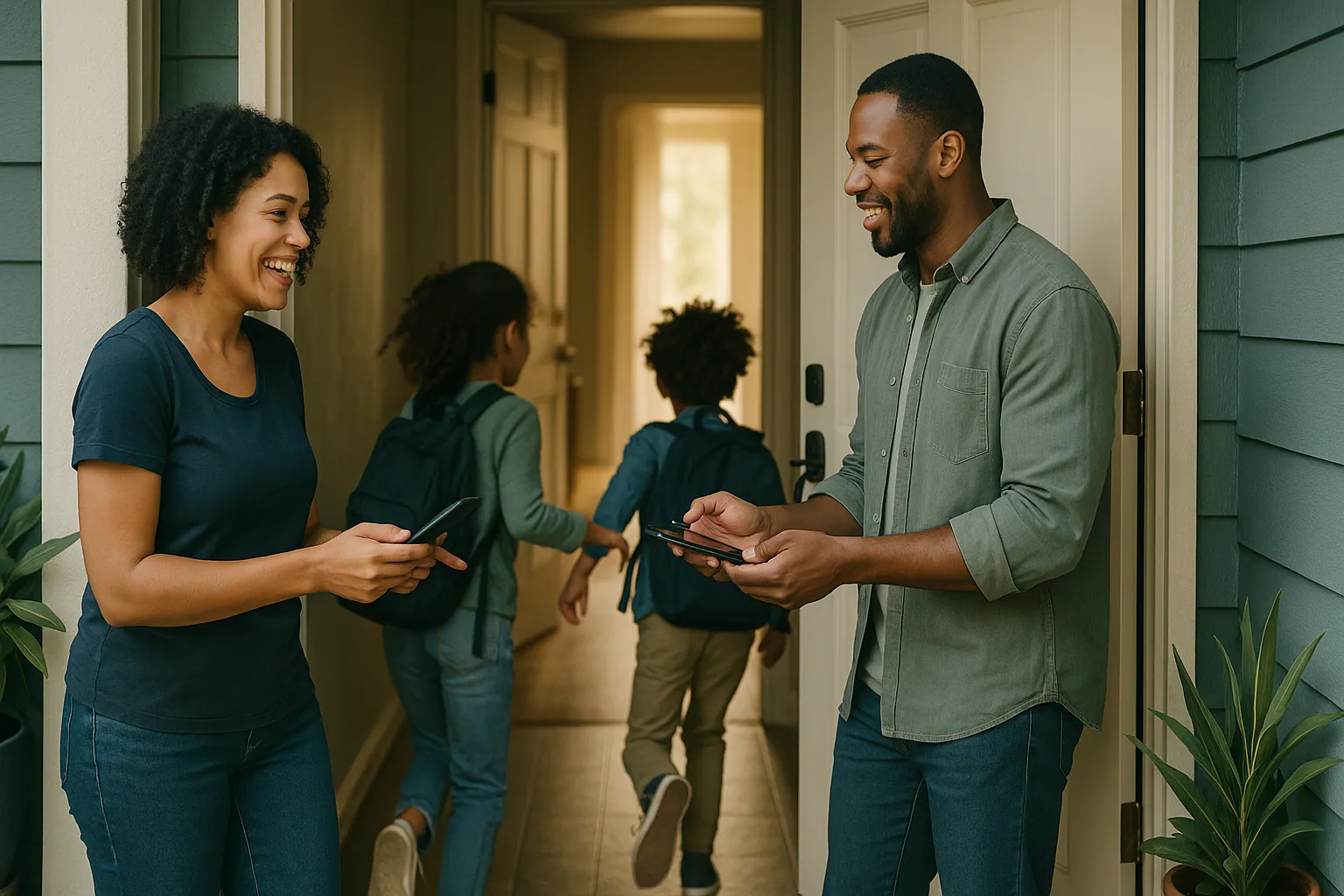
Playdate Protocol: What to Exchange With a New Family
The polite-but-thorough information swap before a first playdate. What to share, what to ask, and how to do it without making it weird.
The first playdate at a new family's house is one of parenting's small trust exercises. Your kid disappears into a home you've seen for ninety seconds, in the care of adults you know from one conversation at pickup, and everyone involved is pretending this is entirely relaxed.
It can actually be relaxed, if the right information changed hands first. There's a standard exchange for this, even though nobody hands out the protocol. Here it is, in both directions.
What you give
The hosting parent needs four things from you. Your cell number, obviously, plus a second adult's number, because phones die and meetings run long. Anything the host genuinely needs to keep your kid safe and comfortable, with food allergies at the top of that list, stated plainly rather than hinted. Whatever applies from the practical layer, like "she'll need a booster if you drive anywhere" or "he's newly potty trained, apologies in advance." And the pickup plan, meaning who's coming, when, and what that person looks like if it isn't you.
Advertisement
Ads support the free tier. Paid households are ad-free.
The allergy point deserves its own sentence. If your child has one, say it at drop-off even if you said it by text, and confirm the host actually registered it. This is the one item where over-communicating is simply correct.
What you ask
The reverse direction feels more awkward, because asking questions about someone's home can sound like an inspection. Two reframes help. First, the host parent almost certainly wants you to have this information, and second, offering yours first makes asking for theirs feel like completing a form rather than conducting an interview.
The core set is short. Their cell number, and ideally the second parent's too. The address, in your phone, not just in your memory of "the blue house past the school." Who else will be around, which surfaces older siblings, a grandparent, a nanny, without you having to ask anything pointed. And whatever your family's particular questions are, asked plainly. Many parents ask about pools, pets, and, increasingly commonly and increasingly casually, about firearms in the home and how they're stored. The trick with all of these is tone. "We ask everyone" is both true and disarming.
Making the exchange painless
The exchange itself usually happens by text in the day or two before, and one long message covers your half. Something like, here's my cell and my partner's, Leo has a peanut allergy and carries an EpiPen in his bag, my mom Diane may do pickup at 4, she drives a gray Subaru. That message does two jobs. It informs, and it models, since most parents will mirror the format right back with their own details.
Keeping what you learn
Here's the part that pays off for years. The first playdate's exchange produces exactly the information your household will need every time these families interact again, and by default it evaporates into a text thread. The other parent's number, the address, the sibling names, the dog's existence, which adult does pickups. Six months later, for the birthday party, you'll want all of it, and you'll be scrolling.
So file it once, properly. In a shared household list like KeeperCircle, the new family becomes one entry, linked to your kid, with the details in notes, visible to both adults. When your partner handles the next playdate, they're not starting from zero or texting you questions from the driveway. The awkward first exchange becomes something the household only has to do once per family.
Then let go of the awkwardness generally. Every parent on both sides of a first playdate wants the same two outcomes, a fun afternoon and reachable adults. The protocol is just the fastest route to both.