One Parent Shouldn't Be the Family's Only Address Book
When all the household's contact knowledge lives in one parent's phone, that's mental load. Here's how families share it instead.
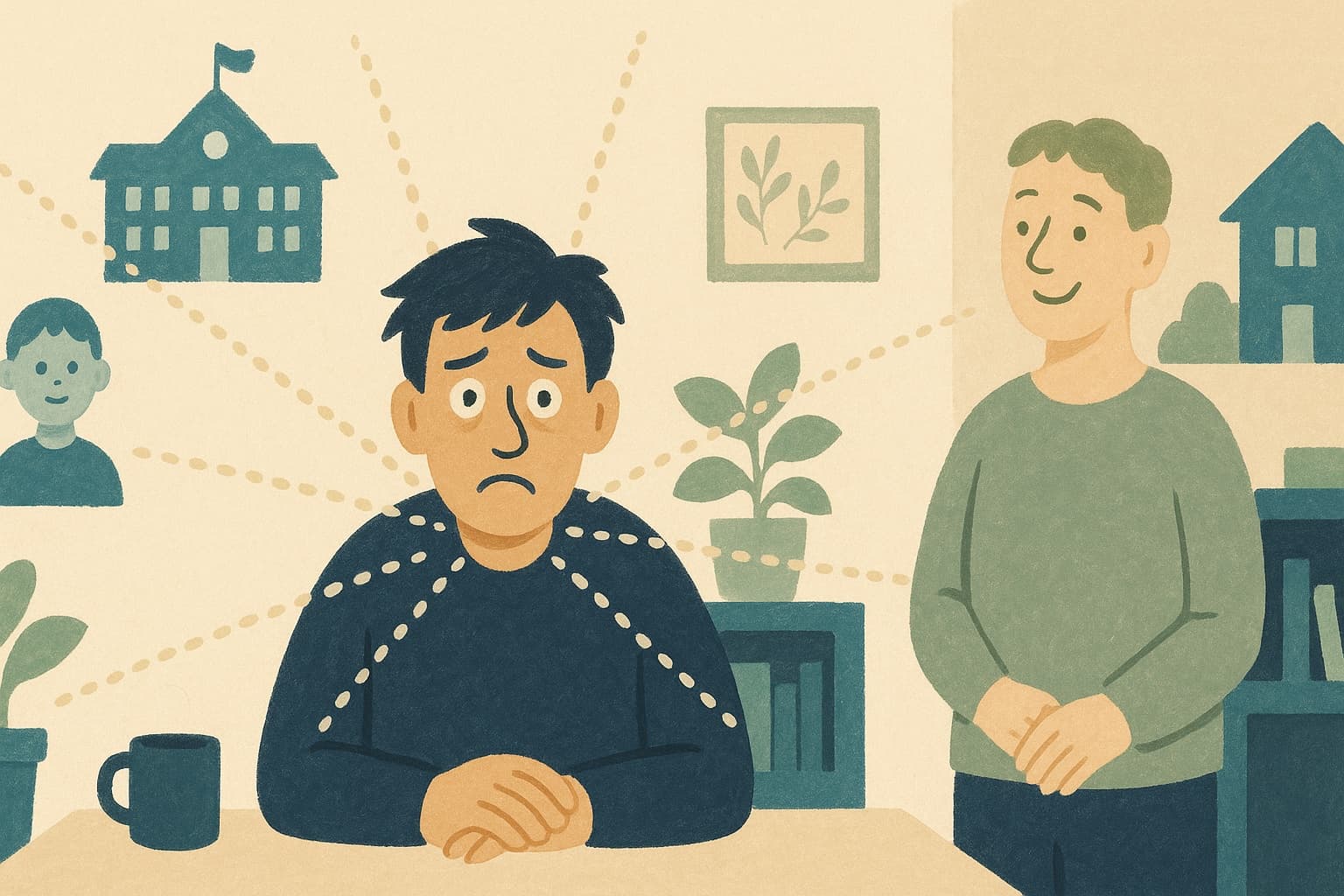
In most families with two adults, one of them is the address book. Not officially. Nobody was elected. But ask who has the pediatrician's number, which sitter is free on Fridays, what the aftercare pickup deadline is, or whether the plumber they used in March was the good one, and the answers all live in the same person's phone, and the same person's head.
This is a slice of what researchers call the mental load, which is not the doing of family tasks but the knowing that surrounds them. The contact-keeping slice is easy to overlook because it doesn't look like work. It looks like being the one who "just knows." But being the family's only directory has real costs, for both adults.
What it costs the keeper
The keeper can never fully hand anything off. Every delegated task comes bundled with an information transfer. Asking "can you call the dentist?" requires first sending the dentist's number, the practice name, which kid's appointment, and the note about their scheduling line. So delegation feels like more work than doing it, the keeper does it, and the load compounds. The keeper is also the family's single point of failure. The day they're stuck in back-to-back meetings or sick in bed is the day the sitter can't be reached and nobody else knows the backup's name.
Advertisement
Ads support the free tier. Paid households are ad-free.
And there's an interruption tax. Every "what's the number for..." text is small; forty of them a month, arriving mid-thought, are not.
What it costs the other parent
This part gets less airtime. The non-keeper parent is structurally sidelined, even when they're fully willing. You can't call the coach whose number you don't have. You can't book the sitter you can't identify. Every act of stepping up begins with asking the keeper for the information to do it, which reads, to everyone including yourself, as not quite being on top of things. Plenty of "my partner doesn't handle the kid logistics" situations are really "the kid logistics are stored somewhere my partner can't reach."
Why good intentions don't fix it
Couples try to fix this with promises like "just tell me these things" or "I'll forward you the numbers," and it doesn't hold, because the problem isn't willingness. It's architecture. Phone address books are personal by design. Contacts saved by one adult are visible to that adult and no one else, unless someone volunteers for manual forwarding forever. The information asymmetry rebuilds itself with every school year and every new sitter, because new contacts default into whoever's phone was present.
Structural problems want structural fixes, and the fix here is almost embarrassingly simple. Household information should live at the household level. One shared list, both adults, everything visible by default, so that sharing stops being a recurring chore and becomes how the information simply exists.
What sharing the directory actually changes
Families who make this shift describe the same small-but-daily differences. Either parent can complete a task end to end, seeing the note and calling the number without an information relay, so handoffs become real handoffs. The "what's the number" texts mostly stop. The context travels too, not just the digits. The second parent can see which kid a contact connects to, what the vendor charged, and that this sitter needs a ride, instead of getting the phone book without the knowledge. And the family gains redundancy, with information that survives any one phone or any one busy week.
This is the problem KeeperCircle is built around. It's a private contact list that belongs to the household rather than to either adult, where contacts carry their context and every member sees the same current picture. But the tool matters less than the principle, and the principle is worth stating plainly. If both adults are responsible for the family, both adults need access to the family's information.
A gentle way to start
This shift goes best as a joint project, not a correction. Sit down together for twenty minutes and build the shared list's first draft. Each of you contributing the contacts the other doesn't have is oddly revealing and instantly useful. Start with the top twenty, meaning doctors, the school, sitters, two neighbors, a few vendors, and the grandparent rotation. Then adopt one rule going forward. Household contacts get saved to the household. The address book retires; the family keeps the knowledge.